Did you see the show “The Fantasticks?” We did, twice. We took our two sons when they were little and then when they became men. The show was still playing in Greenwich Village, so we went and sat in the same seats.
Why am I telling you this? Well, today Eileen took a picture of radishes. She didn’t grow them, but being a Wegwoman, she bought them at Wegmans.
And all of this intersects in this post where we have her photograph of radishes and we have a song called “Plant a Radish” from the original cast album of “The Fantasticks.” It’s about raising kids and gardens. Carl Swenson of Ocean Grove performed all over America in this show. See his comment below.
Radishes. Photograph by Eileen Goldfinger, food editor @Blogfinger. “The Fantasticks” by Harvey Schmidt (music) and Tom Jones (lyrics) ran for 42 years at the Sullivan Street Playhouse. Its themes, story and music are timeless. —Paul Goldfinger
Taylor Swift—ignored in high school; spurned by some jock–wonder where that guy is today.
Repost from 2012 on Blogfinger:
Taylor Swift is a huge pop star. In this song, she is a girl in the band and she’s not being noticed by the guy. It’s hard to believe that when you see her, but that’s how it is. This song can take you back to high school–if you want to go there: —PG
Is that Taylor on the right? She’s dating her clarinet. The guy’s a jerk. Look whom he prefers to her.
Front parlor: Tali Esen sat at his grand piano (left side, by the windows) while Caruso stood in front of the fireplace. All photos by Paul Goldfinger
By Paul Goldfinger and Eileen Goldfinger (home, garden and food editor at Blogfinger.net). Re-post by popular request:
1906 was a marvelous year for Ocean Grove and the Camp Meeting Association. The town attracted huge crowds to the summer events. Photographs of the era showed wall to wall people at the beaches and bathing pavilions. The Great Auditorium, with its 10,000 seat capacity, was one of the first mega-churches, but it also was the home of incredible musical events, with spectacular performances by stars such as John Phillip Sousa and Enrico Caruso.
A well known impresario named Tali Esen Morgan was the man responsible for these ambitious programs which included a children’s chorus of 1000 voices and a 63 piece orchestra. He also was in the process of having the Hope-Jones organ installed in the Auditorium— an important event in the town’s history. The organ made its debut in 1908.
Tali Essen Morgan was a man with big ideas who loved to entertain, and it was in 1906 that he built his magnificent home at 51 Abbott Avenue on a double lot. The design reflected his grandiose personality. It was one of the largest and most beautifully appointed homes in OG, with a layout that was perfect for receiving guests.
Oral history tells us that in c. 1910, Enrico Caruso, the famous tenor, was in town for a concert at the GA. Prior to the event, a group of people gathered in the Morgan front parlor for a recital. Morgan sat at the grand piano while Caruso sang in front of the fireplace. Tali Esen Morgan knew many celebrities and, undoubtedly, many visited his OG summer mansion. He was music director in the Grove from 1901-1918.
Over the years, the house became a convalescent home and a guest house before reverting back to a single family . In the 1930’s Helen Hayes stayed in one of the second floor rooms while she appeared on Broadway in “Victoria Regina” with Vincent Price.
In 2000, the home was purchased by Gayle and Ted Aanensen who filled the house with art, antiques and Gayle’s extensive collections, especially of Beatrix Potter memorabilia. Ted was born in Ocean Grove, and the couple is active in the Historical Society. Gayle is the secretary of the organization and she has written two children’s books about OG history. She says that her writing is “inspired” by the history of her home: “I feel the energy in this house.”
Ted says, “Part of our joy is to save the house for the next generation.” He and Gayle plan to continue their ongoing restoration.
We are featuring the downstairs which consists of the parlor, living room, dining room and kitchen. Pocket doors separate the living room from the parlor. There is a butler’s pantry made of cypress. All the windows, floors, moldings, stained glass and built-ins are original. The kitchen was re-done by prior owners.
Mr. W. Ted Bell, Ocean Grove historian, says, “This home comes complete with a story and an exceptional design—outstanding for its form and function.” He admires the furnishings with “many wonderful things of the period.” Mr. W. T. Bell says that the house has characteristics of several periods including Victorian, Queen Ann and Craftsman.
View from the front parlor into the living room. To the left is a grand curved staircase with antique stained glass windows at the first level.
Coming down the stairs is the front door with this stained glass.
Living room
Dining room with original built-ins. Gayle’s collection of red glass souvenirs from Asbury and the Grove (not shown) reflects the light flowing into the DR.
Butler’s pantry connects the LR and the DR. Cypress woodwork has been stripped to its natural color.
We don’t know what Caruso sang during his recital in the Tali Esen Morgan front parlor, but here is Caruso as he might have sounded that day about one hundred years ago. From the “Pearl Fishers” (Les Pecheurs de Perles: “Mi par d’udir ancor.”) It was composed by Georges Bizet.
Italy. Photo by Paul Goldfinger Re-post from 2014 on Blogfinger.net.
By Paul Goldfinger, Editor Blogfinger.net
The writing on top is in Hebrew. It is the blessing for lighting the candles on the eve of the Sabbath. If you try to read it, you need to go from right to left.
Is it wrong to mix these two religions in this post? I don’t think so. Religion in its most elemental form consists of people seeking God in one way or another.
Candles give off light, just like the sun, the moon and the stars. All people share the gift of light, regardless of religion or no religion. So, as in this church, anyone can light a candle anywhere and find peace in the light.
And anyone can find God when listening to Mozart, even in the dark.
By Paul Goldfinger, Editor Blogfinger.net. Reposted from June, 2012. New photos and music.
Seaside Heights. 2017. Blogfinger photo.
For those of you who are from Jersey, you probably had your favorite shore town for summer fun. I came from Rutherford, and the RHS crowd went to Seaside Heights. It was a wild and sensual place, although there were some dangers.
But it was teenage heaven, especially those summer nights and the girls. If only we were old enough to get into the “Chatterbox” where big name rock groups performed from Philly and elsewhere.
Where did you go for your Jersey Shore “Summer Nights?” —Paul Goldfinger
“Chase the wave or get a Carona? Chase the wave or get a Carona? Chase the wave or get a Carona? I’m thinking, I’m thinking!” PG photos 2012 (Click once to read the label; then back arrow when you stop looking.)
From the Disfarmer album by Bill Frisell and his string band
By Paul Goldfinger. Editor Blogfinger.net
I’ve wanted to set a soundtrack to photography, and we have done that on Blogfinger. But, of course, it turns out that the idea is nothing new.
The story of Disfarmer is totally fascinating to me, for a number of reasons. Mike Meyer (1884-1959) lived in a small town in Arkansas called Heber Springs. There was something strange and unique about him. Evidently he was a maverick, because he adopted the name Disfarmer, presumably to distance himself from his family’s farming roots.
He ran a portrait studio, and just about everyone in town was photographed by him during the ’40’s and ’50’s. The images are those of rural folks at a particular time and place, but he was a very meticulous and inspired photographer; you can see that by the haunting and beautiful quality of his work.
He never achieved fame in his lifetime, but in the 1970’s, his negatives were discovered, and he became famous for “a career that embraced both obscurity and a rigorous aesthetic” (quote unknown source).
The great jazz guitarist Bill Frisell became interested in Disfarmer when he was commissioned by the Wexner Center of Art in Columbus, Ohio to write a score to accompany a retrospective of Disfarmer’s work. It was made into an album. When Frisell’s string band performs this music, the Disfarmer images are shown behind the group.
This song, “I Can’t Help It (if I’m still in love with you)” was written by Hank Williams. Click on the player below.
The slide show is of Disfarmer’s photography: He made portraits of Americans in rural Arkansas who were looking their best for this artist. (run your cursor on the bottom to find a control to stop at each image)
The “Disfarmer Project” preserves the legacy of this artist’s work. You should look at the short video about Disfarmer at their site: link to the Disfarmer Project
The hit HBO show Boardwalk Empire won 8 Emmy’s including one for Vince Giordano and the Nighthawks who put together the compilation soundtrack for the series. Vince and his orchestra are popular performers in the New York area. A group of Grovers travel into NYC frequently to hear them perform. The show is about prohibition-era Atlantic City.
Steve Buscemi as the gangster Nuchie Thompson
The music is from the 1890’s to the Roaring Twenties. This song “Alice Blue Gown” features the Nighthawks with a vocal by Amber Edwards. It was featured in episode 4 and is from the 1919 movie, “Irene.”
Wickipedia says, “Alice blue is a pale tint of azure that was favored by Alice Roosevelt Longworth, daughter of Theodore Roosevelt and which sparked a fashion sensation in the U.S.” –Paul Goldfinger Editor. Blogfinger.net
We have a winner. She is Vera Catalli of New York City. Congratulations Vera—this was a tough one.
Gordon Jenkins wrote this song and he considered it his finest. It was recorded by Frank Sinatra, Nat King Cole, Tony Benedetto (aka Tony Bennett) and here, it is Telly Savalis who, although known best for his acting, did some singing during his long career.
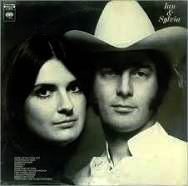
Ian and Sylvia.c. 1964. Ian wrote this song. Internet photo.
Ian and Sylvia were a folk and country singing duo from Canada. In the mid-60’s they were part of the Greenwich Village folk scene that included Bob Dylan, Peter/Paul/Mary, Phil Ochs and many others. This song “Four Strong Winds” was their first hit. PBS ran a documentary about that period in music history.
“..but our good times are all gone..”
It was a time of turmoil including the Civil Rights struggles and the Vietnam War.
 Radishes. Photograph by Eileen Goldfinger, food editor @Blogfinger. “The Fantasticks” by Harvey Schmidt (music) and Tom Jones (lyrics) ran for 42 years at the Sullivan Street Playhouse. Its themes, story and music are timeless. —Paul Goldfinger