Feeds:
Posts
Comments

Archive for the ‘Medical topics’ Category

AMA_masthead_728

Source:  LA Times

Source: LA Times

One national news broadcast, several major newspapers, one wire source, and numerous consumer online medical sources report a study suggesting that mental decline is associated with heavy drinking in middle-aged men.

ABC World News (1/15, story 8, 1:40, Sawyer) reported that a study (1/16) published online Jan. 15 in the journal Neurology “shows that beer and wine speeds up memory loss, but it seems only if you drink a certain amount.”

The Los Angeles Times (1/15, Healy) reports, “Middle-aged men who consume an average of more than 2½ alcoholic drinks per day accelerate the rate at which their memories decline by almost six years over a 10-year span,” the study found. What’s more, “while a higher consumption of spirits such as vodka, gin, whiskey or scotch was linked to the fastest rates of mental decline in men, researchers saw little difference between the cognitive loss seen in heavy beer drinkers (who drank more than 2½ 12-ounce beers per day) and that seen in men who quaffed a half-bottle of wine or more per day.”

USA Today (1/15, Painter) reports that the study, which also “looked at women…found no clear results for them.” The research suggests that “lighter drinking does not contribute to cognitive decline.” The study’s lead author said, “The findings are in agreement with previous studies and suggest that moderate alcohol consumption is probably not deleterious for cognitive outcomes.”

BLOGFINGER MEDICAL COMMENTARY:  By Paul Goldfinger, MD, FACC

I don’t suppose too many of you would be surprised by this study since most of us have experienced the effects of alcohol on our brains. Most of us also understand that as we get on past middle age, a certain amount of mental  (i.e. cognitive) function deterioration might occur due to aging.  But this trial from England of 7,000 government workers  ages 44-69  (mean age 56)  shows that fairly heavy drinking will accelerate the progress of cognitive decline. The study was published on January 15 in the journal Neurology.  You can read the definitions by clicking on the links above.  Note that there weren’t enough women in the trial to come to any credible conclusions about them.

The USA Today article mentions adverse effects of alcohol drinking which include “increased car crashes.”   I’m sure you all are shocked by that disclosure.

As a cardiologist, I have the peculiar task of advocating mild alcohol use , especially red wine, for prevention of coronary disease, while preaching against heavy drinking because of risk of some forms of heart failure.   But that advice is consistent with the results of this trial which showed no cognitive impairment for those who are light or moderate drinkers. Only the heavy drinkers had brain problems.

Other serious disorders which can be increased by alcohol  include breast cancer, brain damage, and liver disease.

Read Full Post »

images-2

By Paul Goldfinger, MD, FACC

You should understand that these JNC 8  (Joint National Commission) guidelines were first published in 1972, and “since then the incidence of strokes has fallen by 70%, and heart failure rates have fallen more than 50%”  (Source: NY Times, Gina Kolata 12/18/13)

Most doctors will follow these recommendations, but the JNC stresses the importance of making individualized decisions when treating patients. Such flexibility is essential for excellent quality care.

There are two central issues at play in the field of hypertension.  The first is, “What is the definition of hypertension?”  The second is, “What is the correct way to treat hypertension?”

There has been no fundamental change in the definition of hypertension in 30 years including the current guidelines.   Anyone who has a persistent BP reading of over 140/90 is diagnosed as being hypertensive. Sometimes a patient may only have high systolic (the top number) readings or just high diastolic (bottom number) readings, but in such instances, those patients are also considered to have hypertension.

The diagnosis of hypertension should not be made from just a few BP measurements. Especially unreliable are isolated readings in a doctor’s office.  In my practice, I would insist on multiple home readings taken at various times of the day, in various circumstances, and with written documentation.  A very good test for diagnosis is a 24-hour ambulatory BP monitor, but insurance companies often will not reimburse for that expense.  (about $225.00 )  Sometimes it’s good to get a test anyhow and pay for it yourself.

The JNC 8 report represents the first change in ten years regarding guidelines for physicians as to when and how to treat high blood pressure.   This group has its origins at the National Institutes of Health, and it uses evidence derived from RCT’s (randomized clinical trials.) This commission, comprised of experts, took five years of study before coming up with this result.

The actual document is quite complicated. But the most important point is that treatment should be started for anyone over age 60 who has a blood pressure exceeding 150/90.  The cutoff used to be 140/90, but the commission decided to be less strict on the systolic number based on the studies.

For those under age 60, 140/90 is still the cutoff number, although the evidence regarding how to treat young hypertensives is less compelling.  Unlike the prior recommendations, lower goals for diabetics and with chronic kidney diseases are no longer recommended.

Some of you may have heard from your doctors that your BP should be 120/80 in order to maximize risk reduction, but that concept has been rejected by JNC 8 because it is unproven.

Your doctor may choose to treat your hypertension with non-pharmacologic  “life style treatments” that include diet (including salt restriction*,) weight control and exercise.  Those treatments should be adopted by anyone with high blood pressure, but there is no strong evidence that they alone can reduce the risk of complications.  In addition, life style approaches can be tried without drugs, but only in the mildest cases. If someone has moderate or high readings, there should be no delay in initiating drugs.

The guidelines are very specific regarding which drugs are used, and it is common for patients to require multiple medications in order to keep doses and side effects down.

In our part IV installment, I will share some of the insights and ideas that I have followed after 30 years in practice and which pretty much fall in to the realm of “the art of medicine.”  Patients need to know that many decisions which doctors face  must be made using sound judgment, experience, collaboration with colleagues, and clinical studies which do not rise to the lofty category of  RCT’s.

* Blogfinger article earlier this year about saving lives with salt restriction:

Blogfinger salt article

Read Full Post »

Joint National Committee 8 hypertension guidelines just announced.

Joint National Committee 8 hypertension guidelines just announced.

By Paul Goldfinger, MD, FACC

Professor of Medicine at the Blogfinger Off-shore School of Medicine in Ocean Grove, NJ

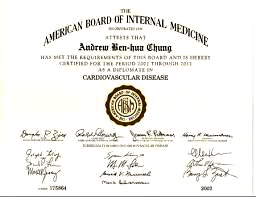
My specialty boards are in internal medicine and cardiovascular disease. But those names are misleading. All doctors practice internal medicine, even dermatologists, because skin problems can reflect something that is more than skin deep. Even physicians who are board certified as cardiologists need to look at their certificates to recall that the word “vascular” is part of who they are. That is important for our topic, because the “vascular department” is where high blood pressure lives.

I am not Dr Chung, but I have one just like this, but it has my name: Blogfinger, MD

I am not Dr Chung, but I have one just like his—it has my name. Dr Chung’s is on the internet

There are significant differences from specialty to specialty.  In general, however, you need a certain personality to enjoy your job as a physician, depending on your chosen branch of medicine.

Surgeons tend to be more flamboyant than internists. They usually  like instant gratification.  Their motto is “When in doubt, cut it out.” But internists need to enjoy small victories; in fact they have to consciously identify their personality goals, or they could hate their jobs.

It’s  all about destinations.  If you are an internist and your goal is to prevent death, heart attacks and strokes, then you are seeking success in distant end points which you might not be able to measure.   You need to measure something to see if you are a winner or a loser—a good doctor, or not. In hypertension, we can measure the blood pressure.  The top number is systolic, while the bottom is diastolic.  They are both important.

Unknown-3

I have always enjoyed (yes, doctors can enjoy what they do) diagnosing and treating hypertension.  In the 1960’s, it was much more of a challenge than it is now because now we have  technology (eg echocardiograms), a wide variety of effective medications, and a major public health initiative to deal with the “silent killer.”

In 1941, FDR had a blood pressure of  188/105. We would have called that “moderate hypertension” and it could have been effectively treated with drugs if they had existed.   His doctor didn’t have much to do for it. He just took notes in his journal.

In 1944, before FDR went to Yalta, his BP was running 210/120, and then, after that arduous 14,000 mile round trip journey, he developed “malignant” hypertension with heart and kidney failure.  He returned to Georgia and had a brain hemorrhage, at which time his BP was recorded at 300/190. He died at age 63.  But now, a patient with hypertension can be treated better than the President of the United States over 60 years ago.

When I was an intern in 1966 at Mt . Sinai Hospital in New York, we did the best we could for hypertension with only a few suboptimal drugs at our disposal. It was frustrating.  We used a drug called Ismelin  (guanethidine). It was pretty powerful, but it had issues, one of which  impressed this 25 year old new doctor—it was called retrograde ejaculation. Just the name alone was enough to give any guy the willies. We’ll skip the graphic details.   As it turned out, that side effect wasn’t so bad, but it sure was startling.  It taught me to ask the right questions about medication side effects.

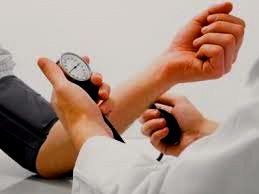
So fast forward to current times where we have so many great drugs for hypertension. We can pretty much get anybody’s BP down to where it belongs, and I loved monitoring that process using a simple device–a sphygmomanometer. You know it as a blood pressure machine. And watching those numbers get to the right place by doing that medication voodoo that we do so well;  I found that deeply satisfying.  The victories came in small increments, and patience was required.

Part of that pleasure was in knowing about the evidence that showed that treating hypertension can prevent heart attacks and strokes. That provided another ingredient—motivation to do a good job.   It’s  that EBM—evidence based medicine—that we have been hearing about during our Obamacare discussions.

Unknown-4

Which brings me to yesterday’s announcement by an expert panel from the National Institutes of Health regarding the latest guidelines (version #8 since the 1970’s) for the treatment of hypertension. Below is the NY Times article on this subject. It is very good.   We will discuss the new guidelines next in Part II.

New York Times on BP guidelines

Read Full Post »

news.yale.edu

news.yale.edu

By Paul Goldfinger, MD, FACC

I have been skeptical about Obamacare since the law was passed.  I have tried to stay clear of the politics. My concern from the start has been, “What the heck is inside that law?  How will it actually work in terms of the practice of medicine?” Hardly any details were released, and it now seems that some legislators may not have read it, as indicated by all the surprised lawmakers who are currently upset about cancelled pre-existing health insurance policies.

So now that  the controversy is looking past the incompetent roll-out, and assuming that insurance plans will soon be available to purchase on the exchanges, the conversation is moving to the details about the insurance policies themselves.

Naturally, if one is worried about the practice of medicine, paying attention to health insurance is essential.  The President promised that we could keep our existing plans and doctors if we want, giving the impression that the ACA was essentially about the non-insured.

He also gave the impression that the insurance exchanges would give private insurance companies the chance to compete in a free enterprise marketplace.  But now we see that no company can get their policies into the exchanges unless those policies are designed just the way the government demands they be.  As a result, millions of people are losing their existing plans.

 Evidently this aspect of the ACA is hidden somewhere inside the huge pile of papers that make up the bill. It’s just that it was kept under wraps until now when so many Americans are getting those surprise letters.

So now that people are being dropped  (including nearly 1 million in New Jersey) from their existing plans, the administration defends what’s going on by saying that those pre-existing plans are “crummy” and not worth keeping in the first place.  Why are we hearing this news for the first time now?

So we get to the crux of the problem:  The public is too stupid to understand what one needs in an insurance policy to  get quality care.  But history shows us, including what happened in the ’80’s and ’90’s regarding “managed care/HMO’s,” that people do know what they need.  They just have to be educated about the particulars, and the bureaucrats who are running Obamacare, have assiduously avoided telling us the truth until now, and more hidden truths will keep oozing out of the ACA as the  smoke screen continues to fade.

Read Full Post »

AMA_masthead_728

Trialx.com

Trialx.com

Danielle Ofri, author and associate professor at New York University School of Medicine and editor of the Bellevue Literary Review, wrote in the New York Times (10/6, Ofri, Subscription Publication, 9.61M) about how physicians find it difficult to change their own habits, including the tendency to order an annual exam for patients with no health complaints. Ofri notes the Choosing Wisely campaign that urges physicians to reduce “overutilized” tests and treatments and admits that some such habits – such as that exam – are hard to break, and that confession could “give us a dose of empathy for our patients, who are struggling with the same challenges when it comes to changing behavior

From the ABIM (American Board of Internal Medicine:)

Don’t perform routine general health checks for asymptomatic adults.

Routine general health checks are office visits between a health professional and a patient exclusively for preventive counseling and screening tests. In contrast to office visits for acute illness, specific evidence-based preventive strategies, or chronic care management such as treatment of high blood pressure, regularly scheduled general health checks without a specific cause including the “health maintenance” annual visit, have not shown to be effective in reducing morbidity, mortality or hospitalization, while creating a potential for harm from unnecessary testing

BLOGFINGER MEDICAL COMMENTARY.  By Paul Goldfinger, MD, FACC

I have a couple of problems with this doctor’s conclusions.   She says that yearly visits to a physician are useless unless they are for treating specific medical problems or for “specific evidence-based preventive strategies.” She says that such visits have not been proven to save lives or reduce morbidity. In addition she says that such health maintenance visits can cause “potential harm due to unnecessary testing”

Some doctors, like this one, like to hide behind “scientific proof” as the be-all touchstone for quality. There is such a thing as a doctor-patient relationship which needs to be nurtured, like watering a plant.   When you sign up with a physician, your expectation is that the doctor has accepted some degree of responsibility for you.  If you are healthy, you expect that he, or his surrogate, will be available in some capacity 24/7 in case you get sick.  And if he is not available, then you and your lawyer might complain of  “abandonment.”

Thus, the doctor who accepts you as a patient has given you a sort of insurance policy. So it is not only unreasonable, but it is bad medicine, for your physician to not interact with you in person at least once per year, even if you feel fine, whether or not some research trial says that such routine visits are useless. Sometimes good judgement needs to prevail.

If you were not allowed to see that doctor because your ACA policy will forbid it, what happens if you develop a large abdominal tumor that was not diagnosed sooner?  Do you think your lawyer will understand why it was missed at an annual exam that never happened?  Will you and your family wonder why your doctor didn’t check you sooner?

Much is made of preventive medicine as a way to reduce healthcare costs and avoid disease, but this doctor says that routine visits are not needed unless prevention efforts have been proven to save lives. Well, just about all of the prevention techniques that we use have been supported by research including: blood pressure, cholesterol, weight, exercise, diet, stress, smoking, some food supplements, and others.  What are the useless ones that she is talking about?  Just about every “healthy” patient can benefit from a discussion of prevention with their doctor once per year.

And as for useless tests, that can happen with her approved visits as well as with her “useless health maintenance visits.”

So my scientifically unproven conclusion is “bull.”

Read Full Post »

Which is it?  Photo by Millie Stires of Ocean Grove. October 4, 2013

Which is it? Photo by Millie Stires in Ocean Grove. October 4, 2013

It is fall allergy season in New Jersey.  The pollen count for the next few days will be high in OG. Ragweed is the usual culprit .  So, if you are having allergic symptoms, Millie may may have spotted the guilty pollen polluter.

The way it works is that pollen causes an antibody/allergen reaction in the mucus membranes of your nose, eye and throat. This causes histamine to be released, resulting in congestion, itching, etc.

Let us know if any of you are botanists and can identify Millie’s mystery plant.

Read Full Post »

Pres. Obama says he embraces the name "Obamacare"

Pres. Obama says he embraces the name “Obamacare”

By Paul Goldfinger, MD, FACC

On Sunday, the Asbury Park Press began a series on Obamacare. The first two installments were mostly about health insurance. But there were some comments in the piece that went to an aspect that I have been writing about on Blogfinger, namely, “Will Obamacare improve the quality of healthcare in America?”  Of course we have already seen some beneficial changes that have to do with insurance issues, such as the pre-existing illness rules and the ability of everyone to have health insurance.

But, as a physician,  I want to know how the day-to- day practice of medicine will be implemented considering the certainty of  thousands of new regulations that mandate how doctors will do their jobs.  I am skeptical because so little practical information has been released that explains to patients and healthcare workers, including doctors, as to how the everyday machinery of care will work. And I am worried that physicians will not be in charge of medial practice policy decisions.

In addition, these quality concerns tie into money, because quality costs money, so we physicians must also pay attention to financial considerations. The advocates of the Affordable Care Act (aka “Obamacare”) say that it will improve quality while lowering cost.  Do you believe that?

Here is an example of a financial matter that relates to quality: In the first  APP article the following claim is made:  “For every $1 spent per person on smoking cessation, better nutrition and exercise, the government and insurers can expect to save $6 in long-term medical care or about $16 billion, according to Trust for America’s Health, a physician-led public health organization.”

As a prevention expert, I am hopeful that this frontier will be breached, but I am skeptical that the hoped-for financial benefits achieved with preventive medicine will occur,  because we would need a small army of life-style counselors, nutrition advisors, exercise teachers and stop smoking therapists.  Also who will work with the obese, who will properly monitor blood pressure control, and who will monitor lipid (blood fats) controls to achieve recommended targets?  The cost of this prevention component of the ACA will be huge if it is done properly.  Aside from the cost, it will take years to see any results in cost savings or life savings. And there are other issues:

Most primary doctors are not trained to achieve effective prevention results.  For example, studies have shown that primary care doctors rarely achieve target goals for cholesterol therapy.  The ACA  says that it will  depend on primary doctors to achieve the prevention benefits claimed for the new system, but there is a shortage of such physicians, and that will get worse.  Physician extenders such as physician assistants (PA’s) will take charge of prevention, but they are not substitutes for doctors.

Even if we have the proper personnel  and money for prevention, it will be very difficult to get the public to adhere to prevention life-styles . That sales job will take time and money.

And then we have concerns about access. Consider the three quotes below from Bloomberg News:*

“The percentage of family doctors in Massachusetts [a state with a universal healthcare plan] accepting new patients has dropped 19 percent in the past seven years [since implementing their plan] and the percentage of internists accepting new patients has fallen 21 percent over nine years, according to a July report by the Massachusetts Medical Society, an advocacy group for patients and physicians. Only about half of family doctors were accepting new patients this year. ” 

“About 25 million Americans are expected to gain coverage under the health law, commonly known as Obamacare. Starting Oct. 1, as many as 7 million uninsured Americans will begin shopping for private plans through government-run exchanges, with many people eligible to have their premiums subsidized by taxpayers. On Jan. 1, Medicaid programs for low-income people will be expanded in about half the U.S. states.”

“David Longworth, chairman of the Medicine Institute at Ohio’s Cleveland Clinic, was working in Massachusetts when the state passed near universal health coverage. ‘Practices closed and patients would wait for eight to nine months to get in,’ Longworth said by telephone. ‘We overwhelmed the primary care health system.'”

I will continue monitoring the question of quality as the new plan unfolds.  Stay tuned, and please comment below.

Here is the link to Bloomberg News:*

surge of patients link

Read Full Post »

AMA logo_1_1

sharecare.com

The New York Times (8/6, O’Connor, 1.68M) “Well” blog reported that according to the results of a 23-participant study published in the journal Nature Communications, sleep deprivation may result in weight gain, creating “pronounced changes” in the way high-calorie foods are perceived by the brain. Magnetic resonance imaging scans taken during the study indicated that lack of sleep impaired the area of the brain in charge of complex decision-making while increasing activity in reward-focused areas.

Also covering the story is the Huffington Post (8/7, Wilkey).

BLOGFINGER MEDICAL COMMENTARY: By Paul Goldfinger, MD, FACC

I have been aware for some time that sleep disorders, such as sleep apnea, promote increased caloric intake and weight gain, but the mechanism was unclear. But now there is much more that is known about this phenomenon. This particular study is a small one from UC Berkley.

It turns out that this phenomenon is complex. The most important event when sleeplessness occurs is that brain function changes. Areas that make us crave high caloric foods get stimulated while other areas that control rational decision making become suppressed. Also,  chemicals in the brain change along with hormones that affect appetite.  Population studies have shown that the less you sleep, the more overweight you will become.

Some people drink coffee to stay awake, and we now know that coffee blocks adenosine, a brain chemical that makes you sleepy.  But some people are not affected by coffee, so there must be an undiscovered reason for that.

07wellicecream-tmagArticle

So, if you need to lose weight, see if you are getting enough sleep.  I wonder if you can lose weight by taking naps during the day??   I think I’ll take a nap before I go to Days–then maybe I won’t crave that small hot fudge sundae with rocky road ice cream, extra fudge and whipped cream. Maybe I’ll just get a short-shot sundae…..really?  No, they can’t take that away from me.

SAM COOKE

Read Full Post »

AMA logo_1_1

Fruit:  a healthy source of sugar

Fruit: a healthy source of sugar

The New York Times (8/1, Egan,) “Well” blog reports that according to experts, “fresh fruit should not become a casualty in the sugar wars.” In a perspective piece published in the Journal of the American Medical Association, “Dr. David Ludwig, the director of the New Balance Foundation Obesity Prevention Center at Boston Children’s Hospital, said that sugar consumed in fruit is not linked to any adverse health effects, no matter how much” of it is consumed. Ludwig also “cited observational studies that showed that increased fruit consumption is tied to lower body weight and a lower risk of” diseases associated with obesity. In addition, fruit contains beneficial fiber.

Blogfinger Medical Commentary By Paul Goldfinger, MD, FACC

Paul Goldfinger MD presents a lecture on nutritional aspects of cardiovascular prevention at THE HUB, the CMA bookstore where our prevention books are sold. Jane Killilea photo August 5, 2013

Paul Goldfinger MD presents a lecture on nutritional aspects of cardiovascular prevention at THE HUB, the CMA bookstore where our prevention books are sold. Jane Killilea photo August 5, 2013


The Atkins diet was successful for weight loss in the past because it reduced dietary carbohydrates. But that diet encouraged increased intake of red meats and fats, so it is not an ideal way to lose weight and prevent heart disease. As noted recently on BF, a Mediterranean diet is the best dietary choice based on new studies that looked at preventing cardiovascular diseases. ( Link to Mediterranean diet post ) But if you reduce fats and carbs, what do you eat? In this post we address the carb story.

Increased dietary carbohydrates promote increased sugar levels in the blood, and that causes insulin disturbances, diabetes, obesity and heart disease. The Mediterranean diet advocates increased fresh fruits which contain fructose which the body converts into glucose. Some skeptics say that “sugar is sugar” and they don’t see the advantage of preferring fruit to using table sugar or high fructose corn syrup.

But the fact is that an apple is better than a sugared soda with the same number of carbohydrate grams. The reason is that fructose in fruit is encapsulated by fiber and thus, when you eat an apple, the fructose is absorbed slowly and released slowly into the blood stream, thus avoiding sugar surges and high insulin levels in the blood.

Refined sugars, such are found in soda and sugared cereals, get absorbed into the blood very quickly. Taking fresh fruit is a much better source of sugar than refined sugars because it does not promote obesity or diabetes and it contains other nutrients such as vitamins, fiber and other protective substances.

Eating an orange is better than drinking filtered orange juice because of the fiber. Fresh fruit is better than eating dried fruits, especially sweetened dried fruits because there are more calories. Fruit juice is the least beneficial source of dietary fructose from fruits.

As for mimicking a piece of fruit by adding Metamucil (fiber) to a soda, Dr Ludwig says, ““You can’t just take an 8-ounce glass of cola and add a serving of Metamucil and create a health food.” Dr. Ludwig said, “Even though the fructose-to-fiber ratio might be the same as an apple, the biological effects would be much different.”

Prevention Does Work books for sale at the HUB.  Jane Killilea photo.

Prevention Does Work books for sale at the HUB. Jane Killilea photo.

Read Full Post »

Unknown

By Paul Goldfinger, MD, FACC.

In a recent BF article about the health benefits of fresh produce, I stated that there was very little hard science behind the claims for fruits and vegetables specifically.

Fruits and vegetables for prevention BF article

But a large randomized trial from Spain of 7,400 individuals was published in the New England Journal of Medicine on April 4, 2013. There were men (ages 55-80) and women (ages 60-80) enrolled in the study. It showed a 30% risk reduction in cardiovascular endpoints as a result of following Mediterranean diets which include fruits and vegetables among its components. These end points included heart attack, stroke, and death due to cardiovascular causes.

The study looked at “high risk” individuals with no overt cardiovascular disease. The trial participants had Type 2 diabetes or at least 3 major risk factors such as high blood pressure, high cholesterol, family history of early heart disease, smoking or obesity. The trial was terminated early after nearly five years because the results were so striking.

The control group, which followed a low fat diet, did not show a benefit. There were two treatment groups that did show the benefit. They adhered to a Mediterranean diet consisting of fruits, vegetables, extra-virgin olive oil, nuts, cereals, legumes and fish.

One group emphasized nuts ( 30 grams per day of walnuts, hazelnuts and almonds—about one palm full each day), while the other group used extra virgin olive oil (about 4 1/2 ounces per day).  The two “treatment” groups also ate poultry, but very little red meat or processed meats, and little in the way of sweets or packaged baked goods like cookies and cake.

Exercise was not part of the study protocol, nor was caloric restriction, although those components are certainly important for any prevention plan.

The precise way that such diets improve risk was not studied here, but there is a lot of evidence that suggests mechanisms. The authors of this trial said, “Perhaps there is a synergy among the nutrient-rich foods included in the Mediterranean diet that fosters favorable changes in intermediate pathways of cardiometabolic risk, such as blood lipids, insulin sensitivity, resistance to oxidation, inflammation, and vasoreactivity.” (Feel free to comment below if you need further translation of these remarks by the Spanish doctors who conducted this valuable trial)

The report summed it up by saying, “In conclusion, in this primary prevention trial, we observed that an energy-unrestricted Mediterranean diet, supplemented with extra-virgin olive oil or nuts, resulted in a substantial reduction in the risk of major cardiovascular events among high-risk persons. The results support the benefits of the Mediterranean diet for the primary prevention of cardiovascular disease.”

In our book “Prevention Does Work: A Guide to a Healthy Heart” (2011, iUniverse) we advocate a Mediterranean diet for prevention and we teach about it and offer 36 heart healthy recipes to help anyone who wants to make this important life style change. You can get the paper back version on Amazon.com, Barnes and Noble.com, and iUniverse.com. It costs about $12.00. Just search under Paul Goldfinger, MD or “Prevention Does Work.”


Read Full Post »

By Paul Goldfinger, MD, FACC

Tuesday, July 2, 2013. Today was the first of two fish fries held each July and August in the Auditorium Pavilion by the Ladies Auxiliary of the Auditorium Ushers.  A crew from the famous Argyle Fish and Chips company in Kearny, New Jersey (75 years of deep fried  success)  was working in the back, frying fish and chicken nuggets. The line was out the door; well, actually there is no door, but the place was packed. Diners were not only eating in, but there was a brisk take-out business as well.

Argyle restaurant deep fryers.

Argyle restaurant deep fryers.

We spoke to the cooks. They said that they only use canola oil for their frying. If you have to deep fry, canola oil is a good choice because it has less saturated fat and more “healthy” mono and polyunsaturated fats.  However, canola oil is just as fattening (9 calories per gram) as any other oil.  And, if you overheat it, it can be transformed into life threatening trans fats. Reduction in dietary  fats is a good idea for any lifestyle plan that wants to reduce cardiovascular risk. This is especially true for saturated and trans fats.

I think we ought to consider any deep fried food to be unhealthy, although I suppose you could say that some may be less unhealthy than others. My advice: Do not eat any fried food if you can help it.

Links  below about fish fry calories, which come to about 1,000 calories per portion—40-50% fat, some of which are saturated and some are trans fat.    Note that an 8 oz portion of deep fried fish with batter  is about 450-500 calories. The rest comes from French fries, tartar sauce, cole slaw, buttered rolls and ? hushpuppies.

Fish fry caloric information number one

CNBC link on a fast food fish fry

FIVE GUYS NAMED MOE. “Saturday Night Fish Fry,” Original Broadway Case Album

Read Full Post »

Unknown-1

By Paul Goldfinger, MD  (Editor @Blogfinger)

The New York Times ran an article this week (see link below) about the high cost of having a baby in our society. Besides the unconscionable price tags for various obstetrical  services, many insurance plans do not cover maternity care. It can cost a young couple over $40,000 to have a baby. The issue is discussed along with comparisons with other countries. It serves to point out an example of how our fee-for-service system is failing us, especially if a patient has no health insurance and needs to pay out of pocket.

Cost of childbirth, costliest in the world

Another issue related to the high cost of care has to do with hospital services. Last month I went to Monmouth Medical Center for an outpatient cardiology test. At the outpatient registration desk is a sign on the wall  (see photo below.) That sign says that you could be billed separately by all sorts of doctors if you have care at that hospital. The issue discussed below becomes more of a problem if you are an inpatient, but it can be problematic for outpatient care as well.

IMG_3815

You would think, if your hospital is participating in your insurance plan, then all the doctors who work there (e.g. pathologists, ER physicians and radiologists) would be participating as well. It is a reasonable expectation. After all, the patient does not have the opportunity to choose staff doctors who do participate in their plan.

You could get lucky regarding separate bills (so far, I have not been billed by multiple parties  for my test. I think my insurance company will pay.)  But, according to that notice above, you could  get some big surprises in the mail from all sorts of physicians who were involved in your care, such as the doctor who read your x-rays , for example.  This situation becomes especially concerning if you are hospitalized for care, and many physicians, tests, and procedures are involved.

I ran into this issue myself several years ago when I went to the ER at Jersey Shore University Medical Center. I was treated and released.  One reason I went there was because that hospital was  listed as part of my insurance company network, so I expected that ER visit to be covered.  But subsequently, I got a bill from the ER doctor. It said that he does not participate in my insurance plan, even though the hospital does.  I complained all the way up the ladder and finally I reached an administrator who told me that they have been unable to convince the ER physician group to participate. Finally they stopped billing me. You need to complain if you run into this.

As you can see from the Monmouth Medical Center notice above, the same thing is still going on. In fact, I suspect it will get worse. It can be a consumer’s nightmare, as illustrated in the NY Times article above.

I wish I could tell you if Obamacare will fix this, but I don’t know.

Read Full Post »

Sign in park at Mt. Tabor Way and New York Avenue

Sign in park at Mt. Tabor Way and New York Avenue.  PG photo

Kelly Alder, Wall Street Journal

Kelly Alder, Wall Street Journal

By Paul Goldfinger, MD

The first Surgeon General’s Report about the risks of smoking appeared in 1964.  Since then many other updates have been  issued.   At first, the risks seemed to only be that of the smoker. In fact, there were experts who said that only cigarette smokers were at risk because they inhaled.  Pipe and cigar smoking were not considered risky.

But, later, second-hand smoke indoors was also found to have health risks including heart and lung disease and cancer, particularly of the lungs, but possibly of the breast as well.  Indoor smoking was also found to be harmful for pregnant mothers.   As a result, many towns and cities in the US and around the world banned smoking in bars, restaurants, workplaces and other inside locations.  Neptune Township has had such a ban for some time.

About six years ago, evidence began to emerge that showed a risk from inhaling second-hand smoke outdoors.  Clear data from Stanford University showed high amounts of toxic substances in the air breathed by those who were in close proximity to smokers. But once you get more than six feet away, the exposure  decreases substantially.  The Surgeon General has said that even minimal exposure can be harmful.   According to that, there should be zero tolerance for any tobacco smoke  in public places.

In 2011, New York City banned smoking in parks and beaches.  The laws regarding second hand smoke vary from place to place.  Sometimes the bans include bus stops, outdoor restaurants, doorways, sidewalks and construction sites. But not all public heath experts agree with such laws.   (See NY Times link below dated 2011.)

Recently a group of Neptune citizens got together to form an organization called “Move and Improve Neptune.”  They received a CDC grant and they focused on improving health choices in the community.  They were particularly interested in tobacco.  So they set about lobbying the Township Committee to create tobacco-free public spaces.  Schoolchildren made presentations to the Committee. One student told the committee that smoking is associated with increased alcohol use, illegal drug use, and early death.  They also cited the litter and cigarette butts that spoil the cleanliness of our parks.  Evidently no public health experts spoke to the Committee.

A  citizen poll was taken which revealed that 86%  were supportive of the proposed ordinance.     The ordinance  #13-06 was passed in April, 2013.  It was announced in the Coaster, and signs were placed in all the relevant locations.   The law refers to all parks, playgrounds and play fields that are owned by the Township.  The rules do not apply to Ocean Grove property owned by the Camp Meeting Association including the beach and the boardwalk.

We spoke to a Neptune PD spokesman who said that they would watch for offenders, but that no summons would be issued unless someone is a repeat smoker in all the wrong places.  According to Dawn Thompson, Recreation Director for Neptune Township, there are other towns in New Jersey who have such  laws, but, so far, not one ticket has been issued. This program is viewed as an opportunity to educate the public.  Ms. Thompson said that it empowers citizens to approach a smoker and point out that smoking is illegal in that location.  Mayor Houghtaling agreed that this law could help improve the health of Neptune citizens, and the ordinance passed unanimously .

2007 Stanford study of second hand smoke

WSJ 2012 on outdoor smoking

NY Times article against outdoor ban 2011

Read Full Post »

« Newer Posts - Older Posts »