
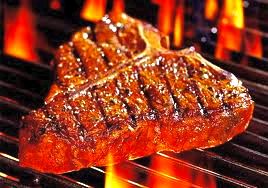
A study from the Archives of Internal Medicine linking red meat to a higher risk of early death generated significant coverage online and in print, and was also featured on ABC World News (3/12, story 6, 2:10, Sawyer), which reported that a “major medical study from the Harvard School of Public Health” is “raising a giant red flag about eating red meat.”
The Los Angeles Times (3/13, Brown) reports, “Eating red meat – any amount and any type – appears to significantly increase the risk of premature death, according to” the study.
USA Today (3/13, Hellmich) reports that investigators “analyzed the diet, health and death data on 37,698 men and 83,644 women. Participants completed questionnaires about their diets every four years.”
Bloomberg News (3/13, Ostrow) reports, “The researchers found that those who increased consumption of unprocessed red meat by one serving each day had an 18 percent higher risk of dying from heart disease and a 10 percent greater risk of dying from cancer…”
The New York Times (3/13, Bakalar, Subscription Publication) reports, “The increased risks linked to processed meat, like bacon, were even greater: 20 percent over all, 21 percent for cardiovascular disease and 16 percent for cancer.”
CNN /Health.com (3/13, Harding) reports, “Based on these findings, the researchers estimate that substituting one daily serving of red meat with fish, poultry, nuts, legumes, whole grains, or low-fat dairy products would reduce the risk of dying in this stage of life by 7% to 19%.”
Blogfinger Medical Commentary: Paul Goldfinger, MD, FACC
Dean Ornish, MD, is a cardiologist from California who advocates extremely low fat diets in preventing heart disease. He commented on the above research saying that a consensus has developed as to the best diet for prevention. He summarized it:
- little or no red meat;
- high in “good carbs” (including vegetables, fruits, whole grains, legumes, and soy products in their natural forms);
- low in “bad carbs” (simple and refined carbohydrates, such as sugar, high-fructose corn syrup, and white flour);
- high in “good fats” (-3 fatty acids found in fish oil, flax oil, and plankton-based oils);
- low in “bad fats” (trans fats, saturated fats, and hydrogenated fats);
- more quality, less quantity (smaller portions of good foods are more satisfying than larger portions of junk foods)
Back in the 1980’s, many people decided to give up red meats, as if that were the only problem food. It turns out that their decision was good, but the situation is much more complicated than that as you can see from the Ornish summary where he wisely pointed out that it is not only about what you don’t eat (like red meat), but also what you do eat instead (like good oils instead of no oils).
As you decide how to eat, for yourself and your family, don’t call it a diet; call it a life style change. The evidence that diet is important for good health gets stronger every year. Our book Prevention Does Work: A Guide to a Healthy Heart (2011) covers all aspects of this subject. (BarnesandNoble.com and Amazon.com and iUniverse.com)